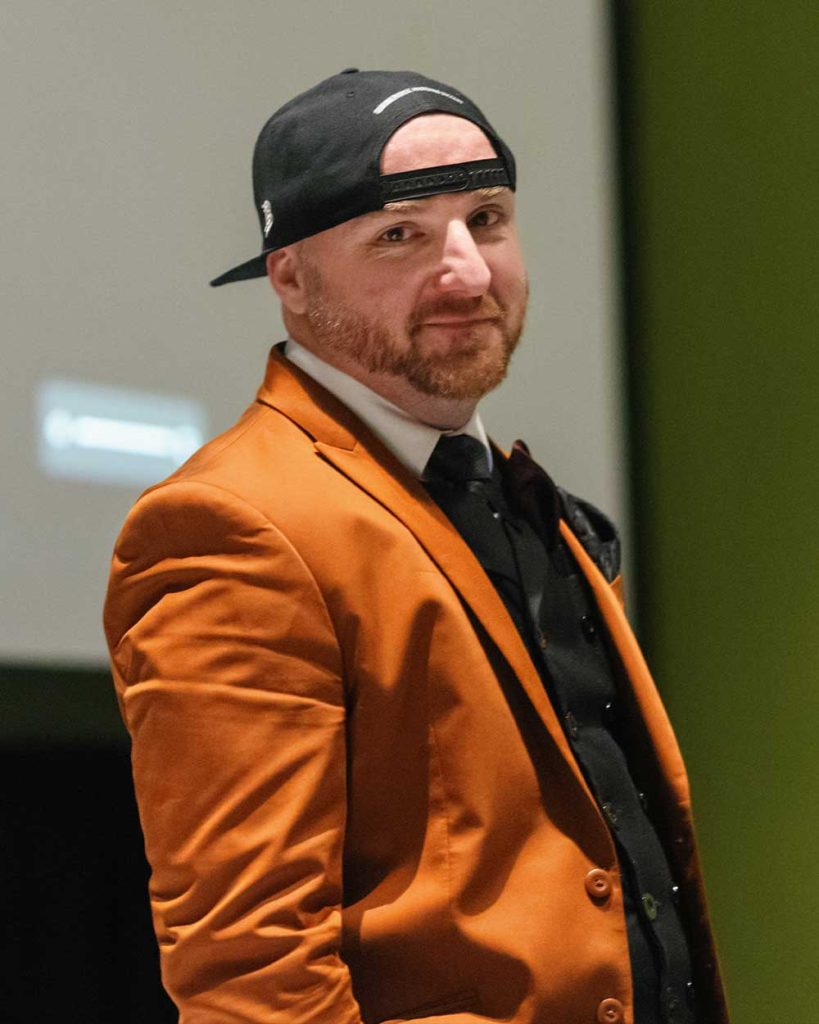



From a Carpeted Office With Smoking Allowed to an $80 Million Roll-Up
In 2018, Zach Cooper-Vastola and his two partners bought Stanley Ruth, a 100-year-old, four-generation family plumbing business in New York City. The office had carpeted walls. People smoked inside. There was no digital system of any kind, just handwritten paper tickets that office staff had to decode line by line.
Today, that same starting point has grown into Hickory, a home services group operating roughly a dozen locations across the tri-state area with nearly 350 employees and revenue north of $80 million. Cooper-Vastola joined Tersh Blissett and Josh Crouch on the Service Business Mastery podcast to talk about how AI and internal systems let a lean, owner-operated group compete directly with private-equity-backed consolidators, without repeating the mistakes he’s watched those consolidators make firsthand.
This article breaks down what Cooper-Vastola shared: what he’s actually seen private equity get wrong in home services, and the specific AI and data strategy Hickory uses to compete without sacrificing the human relationships the business is built on.
Why This Matters Right Now
Private equity has been aggressively rolling up HVAC, plumbing, and electrical businesses for the past several years, and Cooper-Vastola has had a front-row seat to how that plays out on the ground, not just in headlines. His read on the pattern: PE-backed operators often installed high-pressure sales tactics with no real incentive to repair or maintain equipment, cut technician pay after acquisition, and tried to run genuinely local, people-facing service businesses from a distance. The result, in his experience, is predictable: a wave of technicians looking for new jobs shortly after a sale closes, and damaged reputations in local markets that took decades to build.
That’s the backdrop for Cooper-Vastola’s central argument: small and mid-sized home service businesses don’t need to out-fund private equity to compete with it. They need to out-execute it, and AI is one of the clearest levers available to do that without needing outside capital.
Core Insight #1: Building Goodwill Prevents the Post-Acquisition Exodus
Cooper-Vastola was direct about why Hickory’s acquisitions haven’t triggered the same technician exodus he’s seen elsewhere.
Bite-size takeaways:
- Hickory operates as owner-operators, not a fund that buys a business and expects it to run itself. Cooper-Vastola and his partners spend significant time physically present at every location.
- Rather than changing everything on day one, the team asks employees directly what their actual pain points are, and prioritizes fixing those first. Changes that don’t address a real frustration tend to generate resistance without earning any goodwill in return.
- Pay structures are rarely disrupted after an acquisition. Cooper-Vastola’s philosophy is that people generally end up earning more under Hickory, not less, and that elevating people internally, promoting a talented technician into a foreman role, for example, builds more loyalty than a top-down mandate ever could.
- New systems get rolled out with a clear explanation of the benefit to the employee, not just the business. Cooper-Vastola specifically avoids “change for the sake of change,” noting that a system swap only sells if people can see how it improves their actual day-to-day work.
Core Insight #2: Make the Humans Superhuman Instead of Replacing Them
The most pointed part of the conversation was a direct philosophical disagreement with how some larger companies are deploying AI voice tools to replace customer-facing staff entirely.
Real example from the episode: Cooper-Vastola described a moment his sales team hadn’t been told about in advance. A sales engineer took a call, jotted down notes, and went to enter them into the company’s sales system, only to see the customer’s address, email, and full history already populated automatically. He ran over to the internal AI team, assuming something had broken. It hadn’t. An AI agent had been quietly listening to the call and filling in the record in real time. His reaction, once he realized what happened, was to insist the team never turn it off.
Hickory’s core AI philosophy, in Cooper-Vastola’s words:
- The goal isn’t eliminating call center staff or CSRs to compete with a larger, better-funded competitor. It’s freeing up existing staff from repetitive, low-value tasks, like manual data entry and lead routing, so a team of two or three CSRs can operate at the scale of a team that would have needed 20 to 30 people five years ago.
- Customers can tell the difference between talking to a person and talking to a bot, and Cooper-Vastola believes people will increasingly pay a premium to know they’re speaking with someone who genuinely knows their name and history, not an automated voice following a script.
- Crouch, who runs a separate business alongside Blissett, echoed this directly: the goal should be giving people superhuman insight, the kind of instant, detailed analysis that used to require a dedicated analyst, while letting personality and genuine human rapport remain the actual customer-facing experience.
- Backend automation (accounting exports, invoice processing, routine data entry) is where AI delivers time savings. Customer-facing sales and service conversions are where AI-assisted human interaction delivers real revenue impact, and Cooper-Vastola treats those as two very different categories of investment.
Core Insight #3: Build an Internal AI Team Instead of Betting the Business on Outside Vendors
Rather than adopting every new AI vendor pitch that comes through the door, Hickory made a deliberate decision to build internal capability.
- Underwrite AI vendors like you would underwrite a business partner. Cooper-Vastola’s team evaluates whether an early-stage AI vendor is actually likely to exist in 18 months before committing hundreds of thousands of dollars annually to their platform, given how many AI startups in this space are extremely early and not guaranteed to survive.
- Bring in dedicated technical talent. Hickory built out a roughly 10-person internal AI and engineering team, both to evaluate outside vendors intelligently and to build homegrown tools when nothing on the market fits.
- Let local teams request and shape their own tools. Location managers surface specific pain points, and the internal engineering team builds targeted solutions in response, whether that’s an accounting forecasting tool, a calendar sync fix, or a training hub. Cooper-Vastola noted that giving an inventory manager a hand in building their own inventory tool produces dramatically higher adoption than handing down a finished system with no input from the people using it.
- Consolidate data into one place before trying to act on it. Hickory built its own internal business intelligence dashboard pulling together call volume, call sentiment, and full customer journey data across every location into a single view, rather than relying on siloed reports scattered across different platforms.
- Use AI-assisted history to make every customer interaction feel personal. With detailed call and service history surfaced instantly, a CSR taking a new call can reference specific, positive details from a customer’s last interaction (like praising a technician for punctuality and using shoe covers) making the conversation feel high-touch and remembered, not automated.
Conclusion
Cooper-Vastola’s core argument isn’t that private equity is inherently destructive to home services, it’s that a lot of consolidators are executing badly, cutting technician pay, layering on unnecessary sales pressure, and managing hands-on local businesses from a distance. That combination creates a real opening for smaller, owner-operated companies willing to invest in the right internal systems.
AI, in his framing, isn’t a tool for replacing the people who make a home service business trustworthy. It’s a tool for removing the repetitive work that keeps those people from doing what actually builds a reputation: showing up, remembering the customer, and making every interaction feel genuinely human. For businesses trying to compete against consolidators with far deeper pockets, that combination, protecting culture while quietly multiplying capacity, is proving to be a real competitive advantage.
FAQs
Can small home service businesses actually compete with private equity-backed companies? Yes, particularly when private equity operators cut corners on service quality, technician pay, or local management. Building strong internal systems, maintaining company culture, and using AI to increase existing team capacity can offset a private equity competitor’s larger marketing and acquisition budget.
How does AI help home service businesses without replacing customer service staff? AI can automate repetitive backend tasks like data entry, lead routing, and call note-taking, freeing customer-facing staff to focus on building genuine rapport with customers rather than administrative work, effectively increasing what a small team can handle without adding headcount.
Why do employees leave a home service business after a private equity acquisition? Common causes include reduced technician pay, increased high-pressure sales expectations, and a shift toward remote, less hands-on management, all of which can quickly erode the trust and culture that made the original business successful.
Should a home service business build its own AI tools or buy off-the-shelf software? It depends on company size and resources. Larger operations with dedicated technical talent may benefit from building custom tools tailored to specific pain points, while smaller businesses without in-house engineering capacity are often better served by vetted, established software vendors.
Do customers notice the difference between AI and human customer service? According to Cooper-Vastola, yes. Customers frequently can tell when they’re speaking with an AI voice system rather than a real person, and many are willing to pay a premium for the reassurance of speaking with someone who genuinely knows their name and history.
What’s the biggest AI opportunity for home service businesses right now? Based on this conversation, the biggest opportunity isn’t customer-facing AI voice tools, it’s using AI to eliminate repetitive back-office work (data entry, lead intake, call documentation) so existing staff can spend more time on higher-value customer interactions and sales conversations.
The post How Small Home Service Teams Can Outrun Private Equity With AI appeared first on Service Business Mastery.
The post How Small Home Service Teams Can Outrun Private Equity With AI appeared first on Service Business Mastery.